
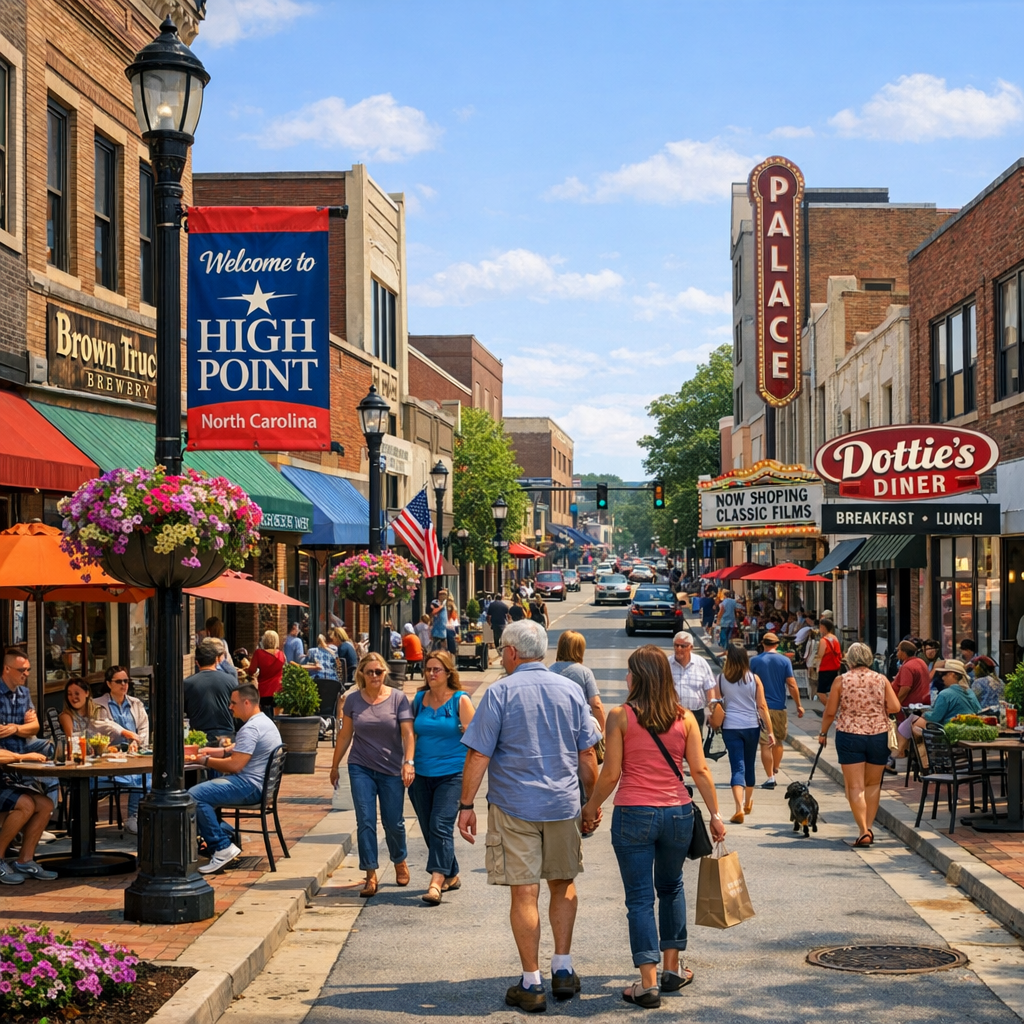
High Point, North Carolina, historically renowned as the ‘Furniture Capital of the World,’ has undergone a significant economic transformation over the years. While the furniture industry remains a cornerstone, the city’s economy has diversified, embracing sectors such as manufacturing, healthcare, and logistics.
Manufacturing: Beyond Furniture
Manufacturing continues to be a vital component of High Point’s economy, employing approximately 8,571 individuals. Notably, Thomas Built Buses, a subsidiary of Daimler, anchors the transportation equipment segment, supporting a network of parts suppliers and logistics firms. This diversification within manufacturing underscores the city’s adaptability and resilience.
Healthcare: A Growing Sector
The healthcare and social assistance sector has seen substantial growth, employing around 7,642 people. High Point Regional UNC Health Care stands as the city’s largest employer, with approximately 2,500 staff members. This expansion reflects the city’s commitment to providing quality healthcare services and the sector’s role in economic development.
Retail and Wholesale Trade: Supporting Commerce
Retail trade employs about 5,636 individuals, while wholesale trade closely follows. These sectors benefit from the city’s strategic location and its legacy in the furniture industry, facilitating commerce and distribution.
Entrepreneurship and Business Acquisition
High Point’s business landscape is also experiencing a generational shift. Young entrepreneurs are increasingly acquiring established businesses from retiring Baby Boomers, a trend contributing to the city’s economic vitality. This movement not only preserves longstanding enterprises but also infuses them with innovative practices and modern technologies.
Economic Indicators
As of 2024, High Point’s unemployment rate stood at 4.1%, reflecting a steady recovery from previous economic challenges. The median household income was reported at $61,288, indicating a stable economic environment conducive to business growth and community development.
Conclusion
High Point’s evolution from a furniture manufacturing hub to a diverse economic center highlights its adaptability and forward-thinking approach. By embracing various industries and fostering entrepreneurship, the city continues to build a robust and dynamic economy, ensuring prosperity for its residents and businesses alike.